How Do I Create a Proposal for a Potential Fractional Client?
A proposal outlines the fractional work you plan to do for a particular client. It typically includes a scope of work, success criteria, a timeline, and the cost. It’s an incredibly important part of what makes you successful in fractional work, and you should create one for every potential client engagement.
This help article is geared towards folks that don’t have much experience pitching themselves, and need the basics of how to do it effectively.
NOTE: If you’re looking for a very thorough breakdown of everything that goes into a proposal, check out our Playbook instead called "The What, Why, and How of Creating a Proposal For a Fractional Client". This article below serves only as a high-level summary.
What is a Proposal
The proposal is a written document (or presentation) that outlines for your potential client what an engagement is going to look like.
It is NOT the legal contract. For that, read our contract best practices here.
The proposal phase of closing a new client is important as it serves to set mutual expectations about what the engagement is, and isn’t.
How to Put Together a Proposal
Before starting a proposal, you’ll typically have had one, probably two or more conversations with the client already. You should be using these conversations to fact-find about the client’s needs so that you can put together a proposal that’s relevant to them. We cover this in [What questions to ask a potential fractional client].
The basic steps to put put together a proposal are:
- Choose your preferred format - typically in an email body, a Google Doc, a Notion Doc, or a slide deck
- Decide what you want to include - we cover this down below
- Solicit the client’s feedback - Sending the proposal should be the start of a discussion
The proposal should be detailed enough to give the client a clear picture of what they’re buying. But, it should not be so detailed that it creates unnecessary rigidity in the relationship. Priorities and goals change constantly, a proposal that is too detailed can actually work against you.
Once everyone is aligned on the proposal, you’ll then sign a contract, which we cover here.
What to Include in the Proposal
There isn’t a single best practice for a proposal. Like many things about fractional and consulting work, it’s largely up to you. But there are some certain common items to include that will set you up for more success.
- A problem statement - Restate what you understand the core problems to be, why the client is coming to you in the first place.
- The scope of work - A clear, point-by-point, description of the work you plan to do.
- Timelines to deliver that scope
- Your time commitment, usually measured in hours per week or hours per month.
- Cost - This is your compensation. (If you need help figuring out what to charge, check out our resources on that HERE).
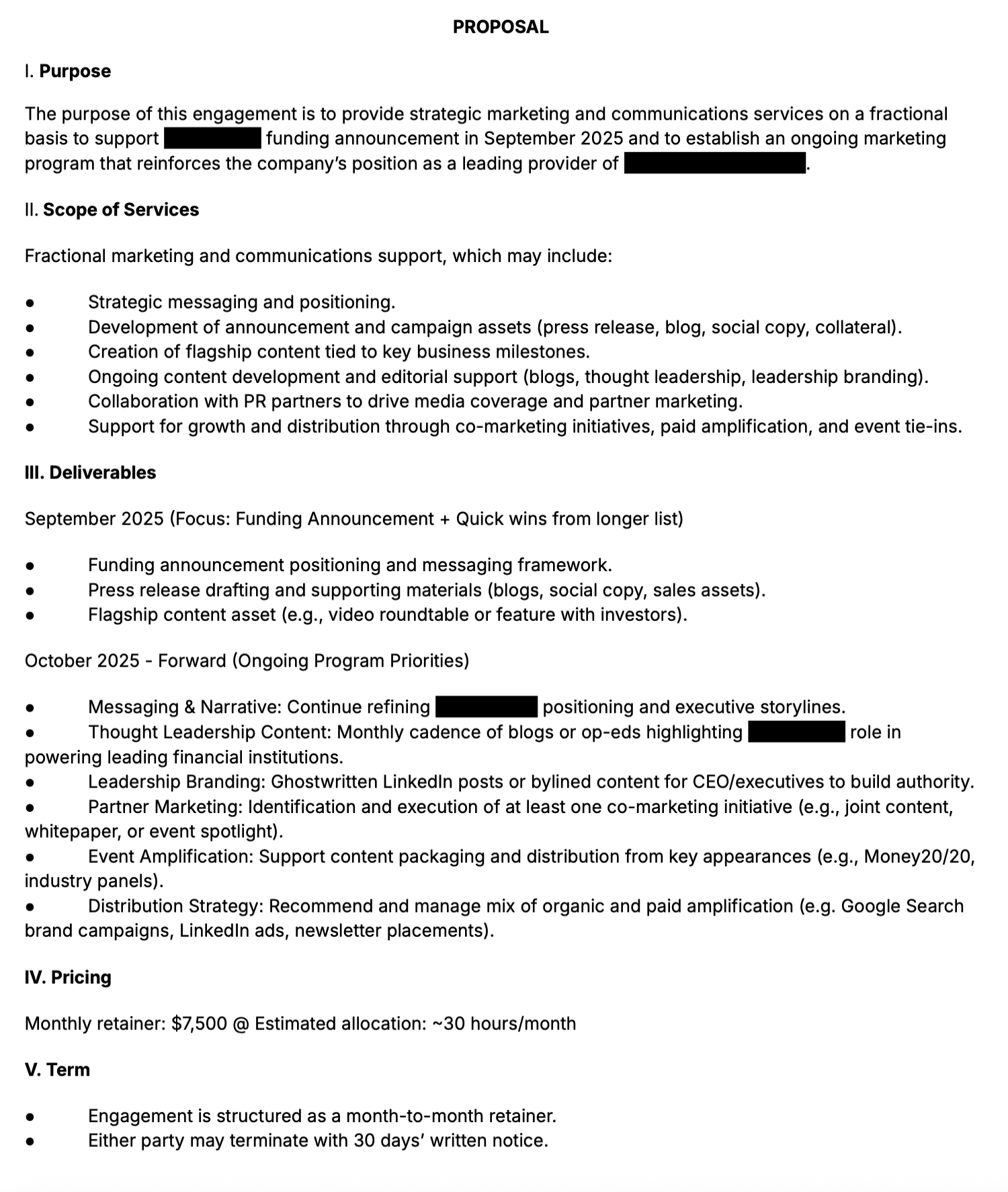
Below is an example proposal for Fractional CMO work. This proposal hits all of the key criteria for a successful proposal. Notably, it has a relatively vague scope of services. That’s okay! Especially if the client doesn’t quite know what they want. The deliverables are also a nice supplement the scope, and include a sense of timeline too.
—
If you want a more detailed breakdown of how to put together an effective proposal, what to include, what NOT to do, and more proposal examples, check out our Playbook “The What, Why, and How of Creating a Proposal for a Fractional Client”.

Who Wrote This Guide?
I’ve helped 100+ companies hire fractional execs and other fractional talent. I also spent a year as a Fractional Head of Product.
I intimately understand how fractional work works from both sides of the table. And this guide is meant to help everyone get up to speed on the fractional world, quickly.
What to read next

Want more?
Send fractional jobs,
playbooks, and more to

.svg)
.svg)
